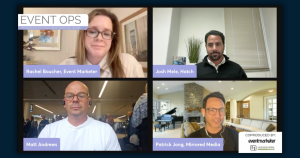
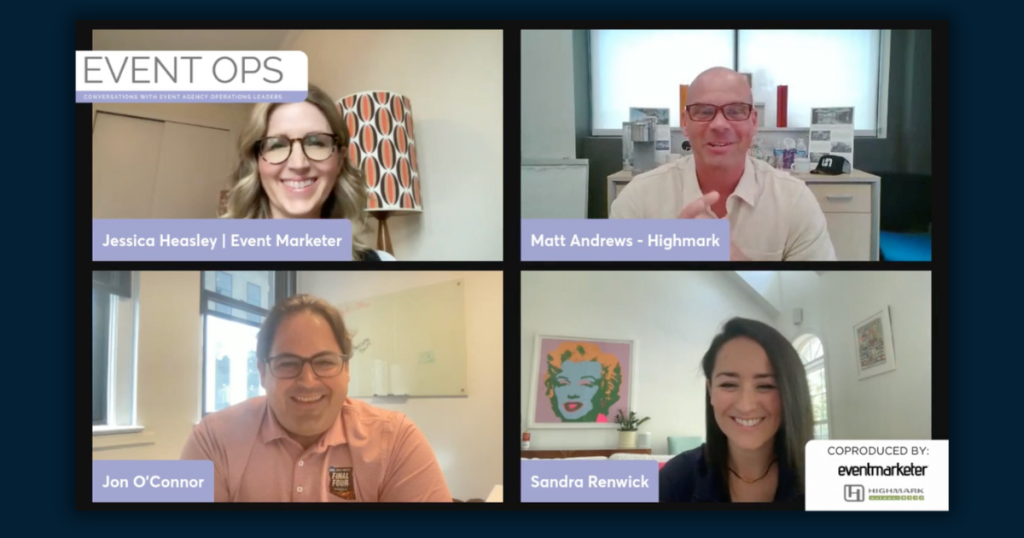
The third episode of Event Ops, Event Marketer’s LinkedIn Live series, brought together three sharp minds who live and breathe experiential operations:
- Sandra Renwick, Senior Director of Operations at Salt XC
- Jon O’Connor, Vice President of Production at 160over90
- Matt Andrews, Senior Vice President at Highmark TechSystems
Guided by Jessica Heasley, Editor and Publisher at Event Marketer, the panel explored how operational teams are navigating faster timelines, shifting costs, weather volatility, and the evolution of talent in a fast-changing industry.
Here’s what they unpacked, and why it matters for the future of event execution.
Time Is the New Currency
“Everyone wants things faster,” said Renwick. “Not just our clients…but consumers as well.”
Speed has always been part of the industry, but this year has taken it to another level. Shorter lead times, faster approvals, and near-instant communication have become standard expectations.
Attendees expect immediate engagement and seamless access from the moment they arrive, and that urgency ripples through every stage of planning and production.
Renwick described juggling five or six active chats at any given time: a reflection of how collaboration has evolved into a real-time, multi-platform dance.
O’Connor agreed: “We’re back in the office, now, four days a week…which helps with collaboration…but these tools allow us to be more integrated across offices and internationally.”
A team in Dubai and a client in New York? No problem. The digital fluency gained during COVID now makes it easy to collaborate and pull off events across borders.
For today’s event ops professionals, managing time isn’t just about deadlines; it’s about managing attention, technology, and team flow.
Smarter Routing, Bigger Returns
Efficiency is the new metric of success. With tighter timelines, every mile and minute count.
O’Connor broke it down: “It’s about determining the goals of the tour…identifying key targets, and then figuring out the most efficient routing against that. What’s happening between Michigan–Ohio State and Alabama–Auburn? What other opportunities can you capture along the way?”
Smarter routing reduces downtime, stretches budgets, and opens the door for additional touchpoints to amplify a brand’s presence on the road.
O’Connor also highlighted how structure choice plays into that equation: “If you’re able to prefabricate trailers and pods…you just have more options and flexibility. Which equates to more uptime, more return on the dollar.”
It’s an approach that aligns perfectly with Highmark’s systems-based structures, built to go up quickly, adapt to any layout, and deliver more value on every project.
Cost Pressures Ease…Sort Of
After years of inflation and supply chain chaos, the panelists agreed: things are starting to stabilize.
“Some areas are coming down, which is great,” said Renwick. “AV and production are more competitive. Fabrication is staying higher, but overall, people are recovering and just want to do great work.”
Andrews added a manufacturer’s perspective: “We’ve seen costs for steel, aluminum, and wood level off, if not go down. Labor is still a hard cost, but you know, we want skilled guys and gals out there in the field.”
For O’Connor, costs have “flattened out,” even if they haven’t dropped dramatically. The consensus? The wild swings of the pandemic era are finally behind us, but strategic sourcing and vendor collaboration remain essential.
Weather: The Uninvited Team Member
Extreme weather is a constant variable.
“It’s coming in with a great plan…but we always end up on C plan,” said Andrews. “We ship anemometers with our structures and pair them with weather apps, so we can see what’s predicted versus what’s actually happening.”
O’Connor shared how his team integrates weather planning into every project: “We pay for a weather monitoring service that we utilize for all of our clients.”
Whether it’s 115 degrees at MLB All-Star or negative 25 in Minnesota, they design around the environment and plan for every scenario.
Their teams also use an Emergency Action Plan (EAP) that covers everything from severe weather to active shooter situations. “It acts as a roadmap so you know the exact course of action,” said O’Connor.
Outdoor activations need precise planning, adaptable structures, and real-time data. Having the right structures and systems in place makes all the difference.
The New Faces of Event Operations
The operations role is no longer behind the curtain.
“Gone is the day of having that pure production person…I need operations and production people that can be client-facing,” said Renwick.
She wants them to be in the room, able to present, explain, and problem-solve in real time.
O’Connor echoed that sentiment, noting that today’s teams need a broader mix of skills, including technology, hospitality, and fabrication, and that these more consolidated roles ultimately make projects run smoother.
Event ops pros should be true hybrids: part technical expert, part strategist, and part creative partner. This shift is giving operations a bigger voice inside agencies and raising the bar for the entire industry.
Building Momentum
Last summer marked one of the busiest seasons in recent memory, and it’s clear the energy isn’t slowing down.
“We’re already loading stuff into CES and past,” said Andrews. “It looks to be a busy time.”
Renwick noted that clients are also thinking differently about live experiences. “They’re not seeing the production and hard costs as a one-time [expense]…they’re really seeing it as an investment to create content [that lives on].”
That mindset reflects a broader trend: brands are prioritizing multi-event portfolios and long-term storytelling over single activations.
O’Connor pointed to the continued rise of large-scale fan experiences—from UFC and MLB All-Star to the NFL Draft—that have become cultural touchpoints for audiences and brands. These moments let brands meet people where their passions are.
While the industry’s pace accelerates, its heart remains the same: grit, collaboration, and creative problem-solving.
For veterans like Andrews, that resilience defines the work. He said his team is getting earlier notice on ambitious projects like pop-up hotels, multi-story builds, and immersive walkthroughs. “We love doing projects like that,” he added.
The challenges (weather, time, logistics) will always evolve, but so will the people behind the builds who make every event possible.
Why It Matters
Event operations might not take center stage, but they’re the backbone of every unforgettable brand experience. Behind every flawless install, smooth load-in, and immersive activation is a team navigating tighter timelines, shifting budgets, and unpredictable conditions, all while keeping audiences safe and engaged.
The insights from this Event Ops discussion show that smarter systems, stronger collaboration, and more strategic planning are what keep the lights on and the magic happening.
Key Takeaways for Event Marketers:
- Plan beyond the plan: Build roadmaps early, but expect to pivot. Always have contingencies for weather, logistics, and vendor shifts.
- Rethink efficiency: Modular systems, smarter routing, and pre-fabrication can dramatically cut costs and turnaround time.
- Empower your ops teams: Modern event ops pros are client-facing strategists as much as they are builders and problem-solvers.
- Monitor in real time: Weather and safety data are essential tools for protecting people and investments.
- Think long-term ROI: Live builds aren’t one-off costs; they’re content drivers that keep the brand conversation going well beyond the event itself.
Ready to Simplify Your Event Ops?
Highmark event structures are designed for efficiency, durability, and sustainability. From fully custom double-deckers to modular pavilions and mobile exhibits, our team helps agencies and brands deliver incredible experiences…even on the toughest timelines.
Connect with Highmark to see how our systems can keep your next event on budget, on brand, and on time.
FAQs
What are the biggest event marketing trends for 2025?
The top event marketing trends 2025 include expanded use of AI, data-driven storytelling, cross-department collaboration, and measurable creative output tied to analytics and technology.
How is AI being used in event design?
AI supports ideation, visualization, and presentation work. It helps creative teams develop 3D renderings, refine concepts, and streamline RFP response materials.
What types of experiences are most in demand?
Consumer activations, influencer events, and live conferences are leading growth areas.
Why is collaboration so central to creative success?
As budgets tighten and expectations rise, collaboration between creative, strategy, and operations ensures ideas are both innovative and achievable.
How can experiential marketing statistics be tracked and leveraged?
Experiential marketing statistics can be tracked through a mix of digital and on-site metrics such as lead generation, social media amplification, dwell time, and post-event engagement. Creative teams use tools like QR codes, mobile apps, and analytics dashboards. When analyzed, they help agencies and builders refine design strategies, measure ROI, and create more effective, data-driven brand experiences.
Related Links
- Event Ops Episode One: The New Realities of Event Operations
- Event Ops Episode Two: Executing in a Complex Experiential Landscape
- A Look Inside Event Agencies’ Creative Processes
- Highmark TechSystems Recognized with Top Honors at the 2025 ExSys Awards
- Content, Conversations, and Connections for Agency Ops Teams
- Highmark Sustainability Statement
- Experiential Marketing
- The Evolution of Highmark at EMS
- Why You Need Strategic Partnerships For Brand Activations
- Indoor Products
- Outdoor Modular Structures
- Mobile Events
- Products
- Resources
- Gallery
- Contact Us