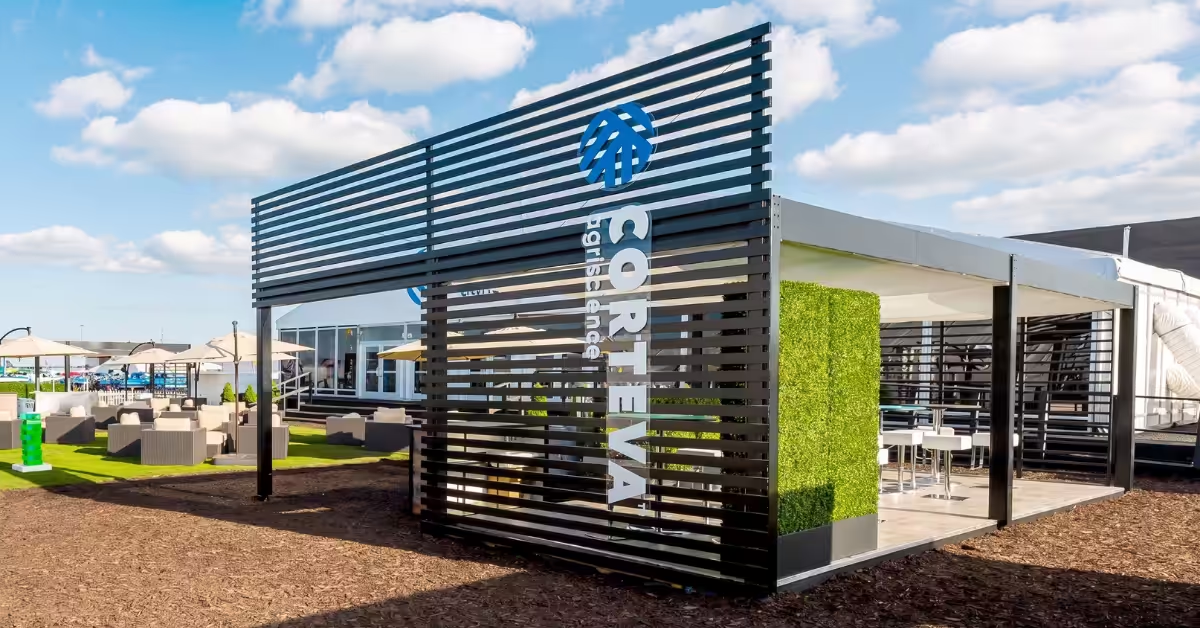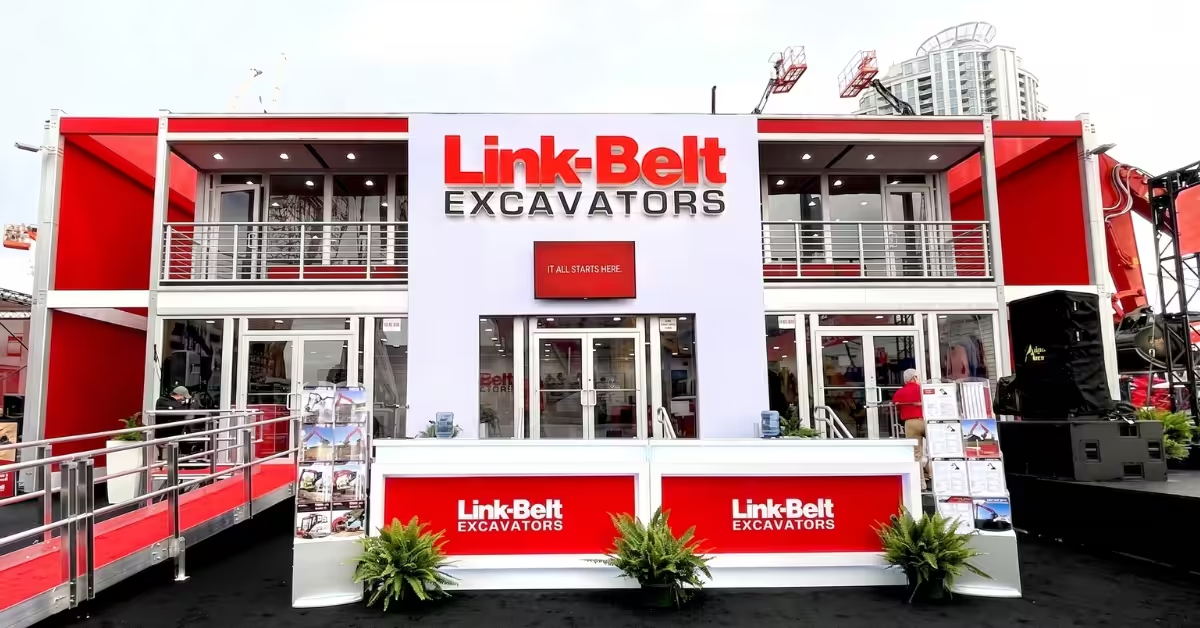
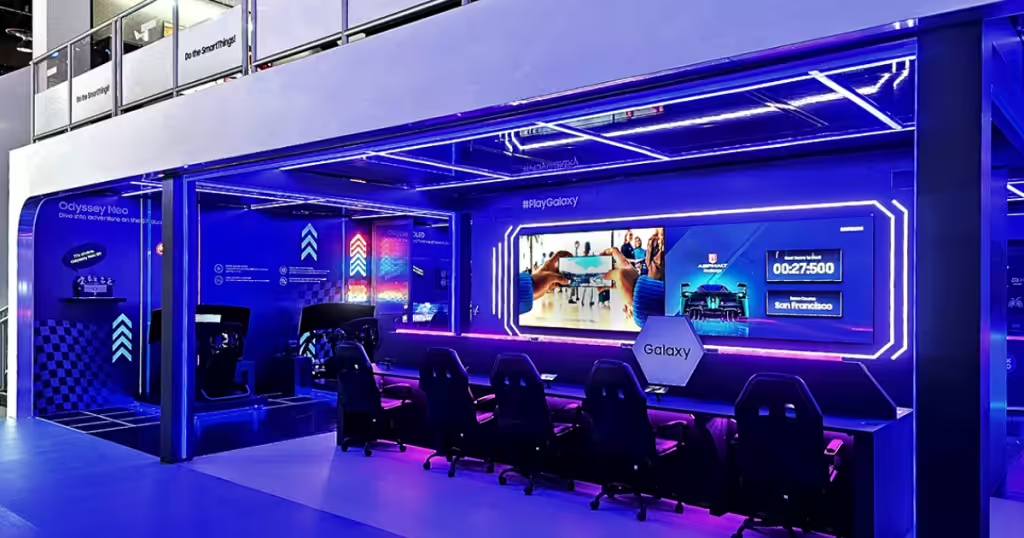
TLDR: In 2026, event and venue design is defined by modular systems that move faster, last longer, and do more. Semi-permanent thinking, vertical builds, reconfigurable walls, and sustainable design are the baseline for brands and venues planning ahead.
At a Glance:
- Semi-permanent structures are replacing one-off builds. Brands and venues are prioritizing modular systems that stay in place longer, adapt over time, and deliver better ROI than disposable installations.
- Vertical design is a competitive advantage. Multi-level structures deliver premium experiences, private meetings, and hospitality without expanding footprints.
- Modular walls have become core venue infrastructure. Reconfigurable wall systems support fast conversions, sustainability goals, and multi-use programming across events, sports, and retail environments.
- Modular architecture is driving the next wave of brand experiences. In 2026, physical, immersive environments outperform digital-only experiences.
The event and venue market did not ease up in 2025. It accelerated. Brands, venues, and organizers pushed hard toward faster installs, smarter reuse, and structures that do more than one job well.
That momentum is not slowing down in 2026; it is compounding, and Highmark sees this shift from the inside.
Across events, sports venues, exhibitions, and branded environments, the same demands keep surfacing: flexibility without compromise, speed without shortcuts, and systems that last beyond a single season. The next year will reward teams that build smarter, not more.
Here are the event structure trends shaping 2026.
Trend 1: Semi-Permanent Structures Become the New Standard
Interest in semi permanent structure solutions surged last year and continues to grow as organizations rethink how long their spaces should work for them.
This reflects a practical reality. One-off builds no longer justify their cost, and traditional construction slows teams down. The market has settled on a smarter middle ground.
Teams come to Highmark looking for semi permanent buildings because their needs extend well beyond a single event:
- Brands want installations that stay relevant for months.
- Sports venues need spaces that meet code, flex with schedules, and support changing programs.
- Museums and corporate lobbies are prioritizing plug and play environments that feel architectural without committing to permanent construction.
The rise of semi permanent outdoor structures follows the same logic. Outdoor programming has expanded, but venues still need durability, weather resistance, and the ability to reconfigure when seasons or layouts change. Locking into a fixed footprint no longer makes sense.
Growing interest in permanent modular buildings signals a broader shift in expectations. Buyers want systems that deliver long-term value while remaining adaptable. Longevity matters, but flexibility still wins.
Highmark leads this evolution with engineered, bolted systems that integrate wiring, maintain structural integrity, and reconfigure with ease. These structures install cleanly, adapt over time, and help organizations protect their investment instead of rebuilding from scratch.
Trend 2: Multi-Level Structures Become Essential for High-Impact Brands
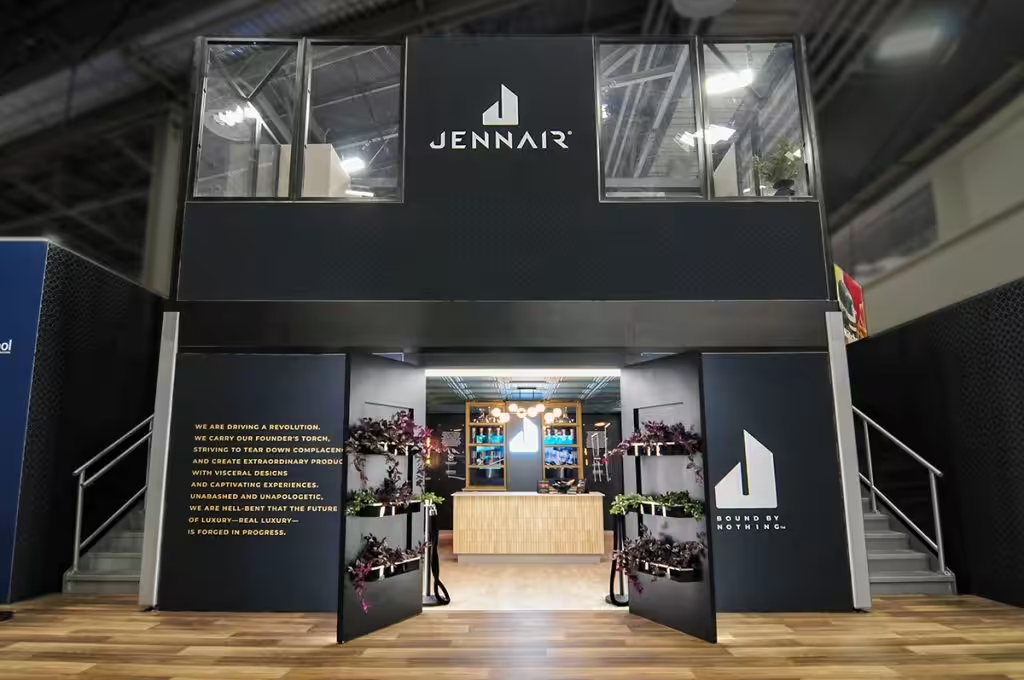
Floor space keeps shrinking, and expectations keep rising. In 2026, that pressure will push brands upward…literally.
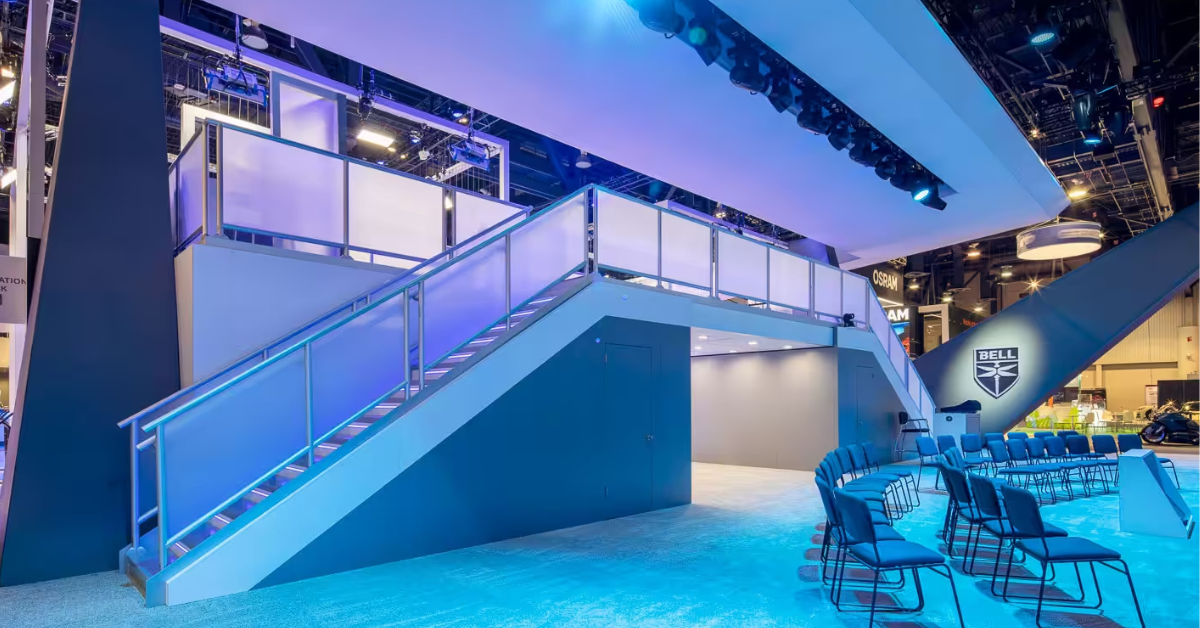
Vertical space has become one of the most valuable assets on the show floor, which explains the sustained interest in the double deck booth.
This shift is also driven by rising expectations around safety and performance. Demand for engineered double deck supports reflects a more informed buyer. Event teams know elevated structures must meet strict load, code, and compliance requirements, and they want systems that perform reliably in high-traffic environments.
Interest in double deck exhibits signals a return to meaningful, in-person engagement. VIP meeting spaces are back, and upper levels provide privacy for hosted conversations, executive meetings, and premium hospitality, without pulling brands off the show floor.
Demand for the multi-deck event structure is especially strong at large-scale shows like CES, NAB, and HIMSS, where elevated experiences are quickly becoming the standard.
Sports venues are driving the same trend, using multi-level structures to support hospitality platforms, sponsor lounges, and premium fan experiences.
Highmark leads in this space through precise structural engineering, repeatable load calculations, and turnkey installation speed. These multi-level systems install efficiently, perform predictably, and deliver elevated experiences without unnecessary complexity.
Trend 3: Reconfigurable Modular Walls Become Core Infrastructure
Walls no longer exist just to divide space. They define how venues adapt.
Behavior shows rising interest in modular walls that support constant change without constant rebuilding. Event teams are under pressure to deliver more configurations with fewer materials, and sustainability mandates are accelerating that shift. Reusable systems reduce waste while supporting faster turnarounds.
Organizations are increasingly drawn to lightweight reusable wall systems as labor costs rise and installation windows tighten. Lighter components move faster, travel more efficiently, reduce wear, and lower the environmental impact tied to shipping and repeated handling.
Inside venues, demand for modular wall panels interior solutions reflects the need for clean finishes that still allow fast changes. The same walls may support sponsor branding one week and wayfinding or retail layouts the next.
These pressures also drive adoption of modular office wall systems, especially in venues that move from game-day operations to conferences, meetings, and hospitality events. Walls must reconfigure on tight timelines without sacrificing performance or appearance.
Highmark’s MAXwall systems, aluminum framing, and seamless compatibility with YOURspace pods will continue to allow venues to convert spaces repeatedly—from sports to conferences to fan zones to retail—while meeting sustainability goals and maintaining architectural quality.
Trend 4: Brand Activations Shift Into Architectural Experiences
The era of disposable pop-ups is fading fast, and in 2026, that shift becomes unavoidable.
Brands are no longer satisfied with spaces that look temporary or feel promotional. They want immersive environments that carry the weight and presence of permanent architecture, even when they are designed to move.
Interest in event activations increasingly points toward experiences built for exploration, not quick impressions. Audiences expect (and brands benefit from) environments they can step into, navigate, and remember. Static signage and giveaway-driven setups no longer meet that bar.
The growth of outdoor brand activation reflects where engagement is happening in 2026. Major tours, festivals, and sports events now expect outdoor experiences as part of the program.
These environments must withstand weather, handle crowds, and still deliver design impact that feels intentional, not improvised.
At the same time, mobile experiential marketing continues to gain momentum as brands prioritize multi-city strategies. Consistency matters, but so does efficiency. Structures must travel well without losing integrity.
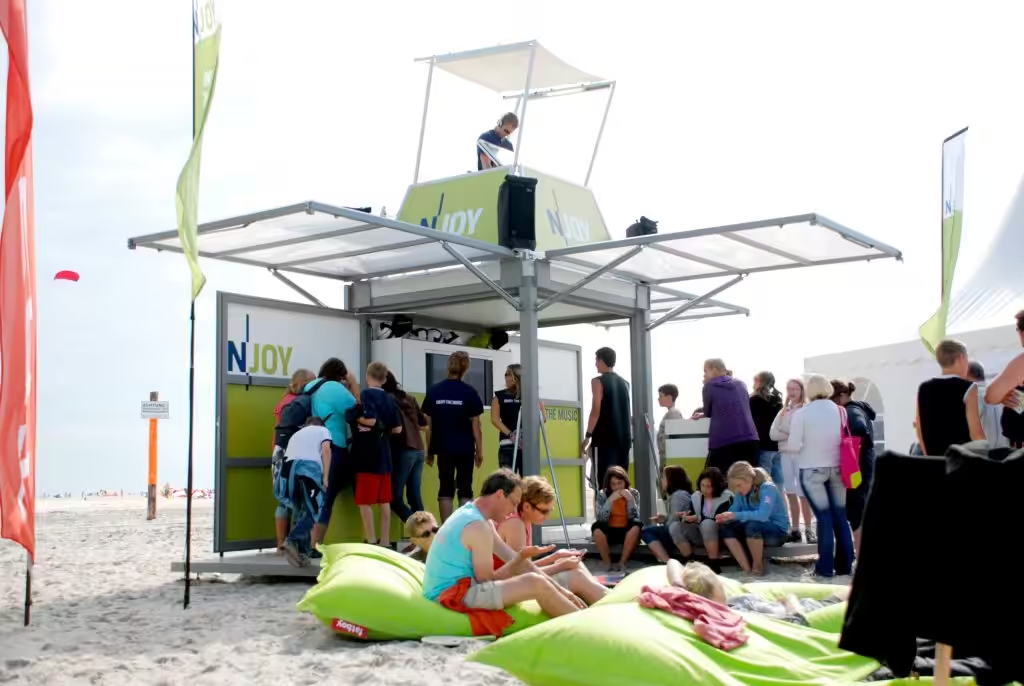
Modular architecture, like brand activation displays, is now outperforming digital-only experiences by offering physical presence, scale, and sensory engagement. Creativity lives in how spaces are built, not just how messages are delivered.
Highmark supports this evolution by designing modular systems that scale seamlessly. From a single installation to a national tour, these structures deliver architectural presence, repeatable performance, and the flexibility brands need to show up consistently.
Trend 5: Sports Venues Drive Modular Innovation
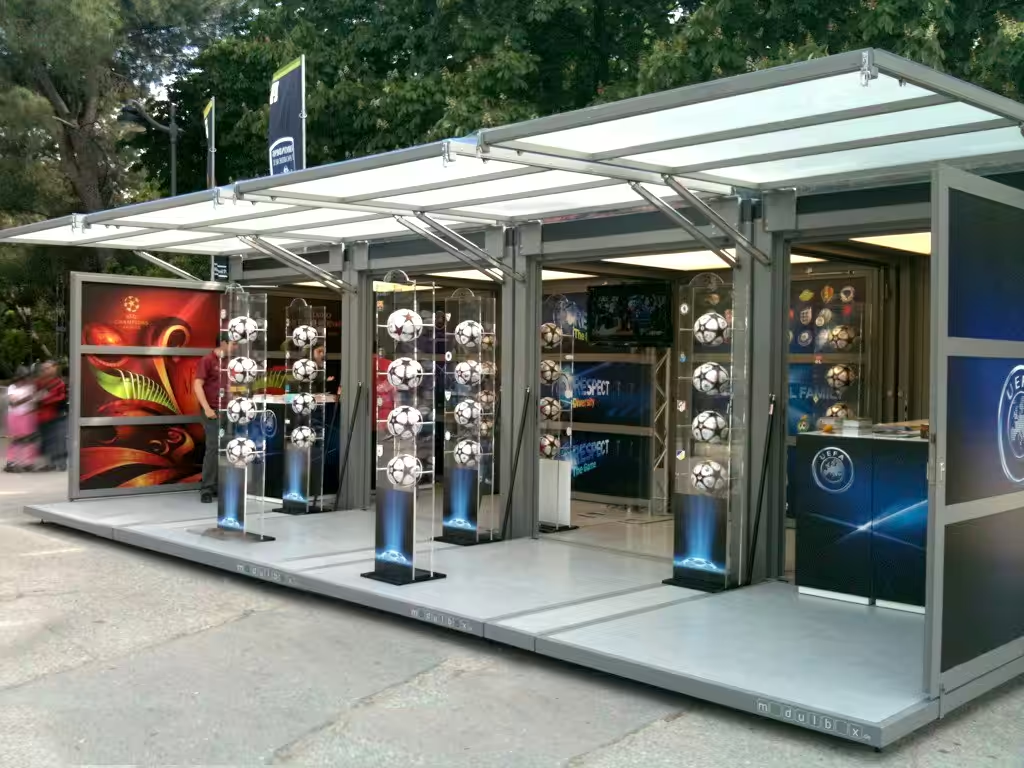
Sports environments continue to influence how modular systems are designed and deployed, and in 2026 that influence only grows stronger.
Teams, venue operators, and cities need spaces that install quickly, adapt easily, and meet code without disrupting operations.
Interest in modular buildings for sporting events reflects the demand for fast-deploy environments that support a wide range of functions, including:
- Pop-up merchandise stores and sponsor retail
- Team meetings, media rooms, and operational space
- Premium hospitality and VIP experiences
Search growth around sports venue solutions shows that demand now extends well beyond seating and concourses. Modular infrastructure is supporting retail, hospitality, broadcast, and back-of-house operations…often within the same footprint.

The rise of semi-permanent sports structures points to longer-term planning without permanent construction commitments. Venues want adaptability that still meets safety and code standards, especially as programming expands year-round.
These needs extend beyond game days. City events and off-season programming require flexible, code-compliant spaces that can support:
- Fan festivals and community events
- Concerts and touring activations
- Seasonal retail and sponsorship zones
Highmark’s modular structures, paired with YOURspace interior rooms, create turnkey installations that perform across sports venues, city events, and non-event sectors alike, delivering reliable, repeatable solutions wherever flexibility matters.
Trend 6: Sustainability Moves From Optional to Mandatory
Sustainability no longer sits in the “nice to have” category. It shapes purchasing decisions.
Interest in sustainable modular systems reflects growing pressure from ESG reporting and corporate responsibility goals. Reusability now carries measurable value.
Search behavior around eco-friendly structures aligns with a push away from landfill-bound builds. Event organizers and brands are prioritizing reuse, durability, and material efficiency.
Reusable systems reduce waste, lower shipping volume, and extend product lifecycles. These benefits now influence vendor selection as much as cost and speed.
Highmark designs with sustainability built in. Aluminum longevity, repeat deployment cycles, and reduced material waste allow teams to meet environmental goals without sacrificing performance or design integrity.
2026 Will Be the Year of Modular Dominance
The strongest signals across the market point in one direction: Flexibility wins. Reusability matters. Semi-permanent thinking defines smart investment.
Brands and venues that succeed in 2026 will choose systems that adapt, scale, and endure. Modular design doesn’t limit creativity; it unlocks it.
Highmark builds for what comes next. From events and activations to sports venues and semi-permanent installations, modular dominance is not a trend. It is the new baseline.
Book a consultation to plan your 2026 event, activation, or venue build.
FAQs
What are the main event structure trends shaping 2026?
The leading trends for 2026 include semi-permanent modular structures, multi-level designs that maximize space, reconfigurable wall systems, and sustainable builds designed for reuse.
There is also a strong shift toward immersive, architectural brand experiences and flexible solutions for sports venues and city events.
What is a semi-permanent structure?
A semi-permanent structure is designed to stay in place for extended periods while remaining modular, reconfigurable, and removable without permanent construction.
How long can modular event structures remain installed?
Many modular systems are engineered for months or years of use, depending on code requirements, environment, and structural design.
Are multi-level event structures safe and code-compliant?
Yes. Highmark’s professionally engineered multi-level structures meet load, safety, and building code standards when designed and installed correctly. Let’s talk about your event venue specifics.
Can modular walls be reused across multiple events?
Modular wall systems are built for repeated deployment, allowing teams to reconfigure layouts across venues and event types.
How do modular structures support sustainability goals?
Reusable systems reduce material waste, lower shipping impact, and extend asset lifecycles.
Are modular structures suitable for sports venues?
Modular structures work well in sports environments due to their ability to be branded, flexibility, speed of install, and ability to adapt to changing schedules and uses.
Can Highmark structures support brand activations and tours?
Yes. Highmark designs modular systems that scale from single activations to multi-city programs with consistent branding and performance.
Related Links
- Highmark TechSystems Recognized with Top Honors at the 2025 ExSys Awards
- Content, Conversations, and Connections for Agency Ops Teams
- A Look Inside Event Agencies’ Creative Processes
- How to Take Your Trade Show to the Next Level, Literally
- The Flexibility of Mobile Exhibits for Events
- Sustainable Event Structures
- Highmark Sustainability Statement
- Experiential Marketing
- All the Services Behind Highmark’s Modular Structures
- The Evolution of Highmark at EMS
- Why You Need Strategic Partnerships For Brand Activations
- Indoor Products
- Outdoor Modular Structures
- Mobile Events
- Products
- Resources
- Gallery
- Contact Us