
Semi-Permanent Modular Structures
Not every structure is meant to last forever. But some need to last longer than a weekend.
Semi-permanent structures live in that sweet spot between temporary installs and traditional construction. These modular structures provide durable architectural environments designed to remain installed for months or years while still maintaining the flexibility of modular construction.
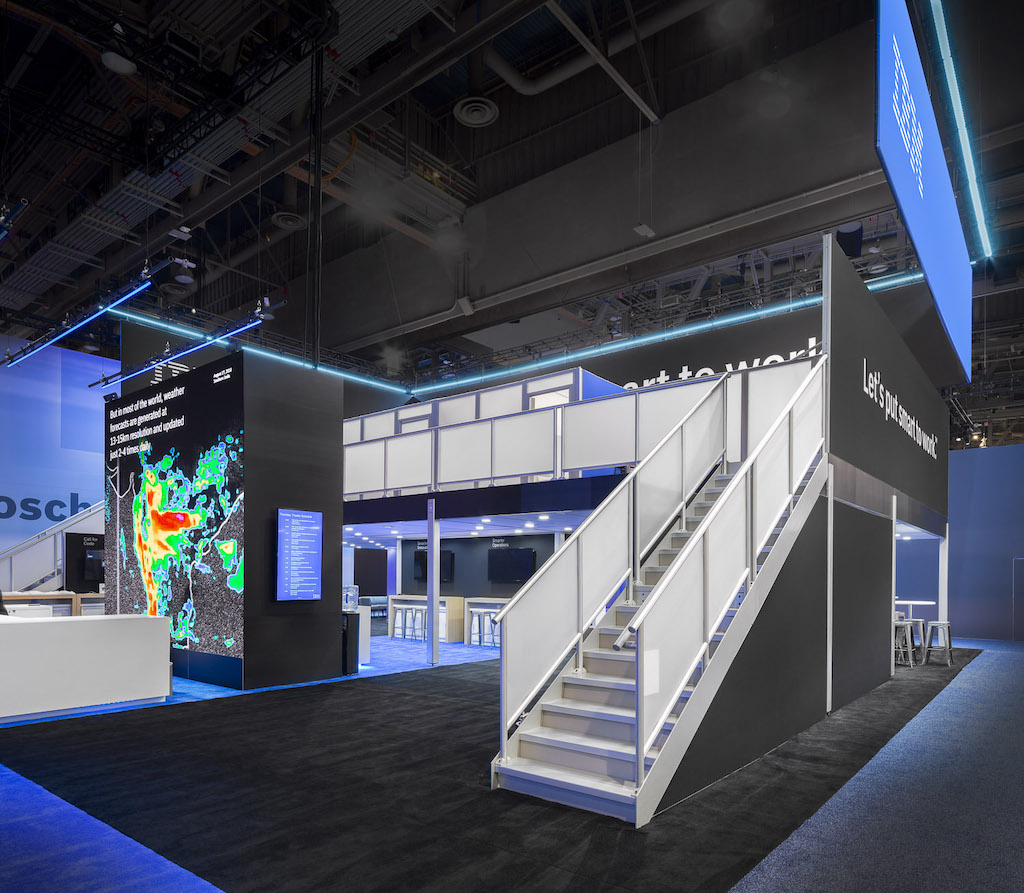
Structures that start as temporary but last as long as you need.
For event environments, sports venues, corporate installations, and brand experiences, semi-permanent modular structures make it possible to create fully realized spaces without committing to permanent construction.
At Highmark, we engineer modular structural systems that allow organizations to build environments that last months or years while remaining adaptable for the future.
Let’s design a semi-permanent structure that works as hard as your ideas do.
Semi-Permanent At a Glance
Infinite configurations possible from one system
What Are Semi-Permanent Structures?
Semi-permanent structures are modular architectural environments designed to remain installed for extended periods (often months or years!) while still allowing reconfiguration, expansion, or relocation.
Think of them as architecture with flexibility built in.
These structures often combine modular components such as structural decks, wall systems, framing systems, and architectural elements to create complete environments that feel permanent while remaining adaptable.
Key characteristics of semi-permanent modular structures include:
- Engineered aluminum frameworks
- Modular construction systems
- Code-compliant structural design
- Reusable and sustainable materials
- Expandable configurations
- Faster installation than traditional construction
Many semi-permanent structures incorporate systems such as modular wall systems, multi-level deck platforms, and custom architectural framing.
Learn more about our modular systems, including MAX Multi-Wall systems, ExpoDeck modular decks, and EventMAX outdoor structures.
Highmark’s systems allow organizations to create:
- Outdoor hospitality environments
- Fan engagement zones
- Experiential marketing spaces
- Festival pavilions
- Multi-level event structures
- Immersive exhibit architecture
- Long-term branded environments
- Temporary government operations and public engagement spaces
Our engineered systems combine:
- Modular aluminum frameworks
- Structural deck systems
- Architectural wall systems
- Code-compliant engineering
- Expandable layouts
- Faster installation timelines
Tents vs Containers vs Semi-Permanent Modular Structures
When organizations need to create a space quickly, a few common options usually come up first: tents, shipping containers, or modular structures.
Each solution serves a purpose. Tents provide fast shelter for short-term needs. Containers offer durable enclosed spaces for storage or basic installations.
But when brands need environments that feel intentional, architectural, and capable of staying in place for extended periods, semi-permanent modular structures offer a very different level of flexibility and design potential.
Tents are for camping.
Containers are for shipping.
Highmark modular structures are for leading brands.
Semi-permanent modular structures combine the speed of temporary installations with the durability and presence of architectural environments. They can remain installed for months or years while still maintaining the ability to expand, relocate, or evolve.
| Feature | Tents | Containers | Semi-Permanent Modular Structures |
|---|---|---|---|
| Typical use | Short-term shelter | Storage or simple spaces | Long-term environments |
| Structural flexibility | Limited | Fixed layout | Highly customizable |
| Brand presence | Minimal | Industrial | Architectural environments |
| Scalability | Difficult | Limited | Modular expansion |
| Duration | Days to weeks | Months to years | Months to years |
| Design freedom | Low | Moderate | Very high |
When organizations need environments that support hospitality, experiential marketing, or long-term installations, modular structures open up far more creative and architectural possibilities.
Highmark semi-permanent structures are designed to support:
- multi-level hospitality environments
- long-term event installations
- corporate brand environments
- exhibition architecture
- modular outdoor pavilions
Convinced? Contact us to learn more about a semi-permanent structure.
Common Uses for Semi-Permanent Structures
Some projects need more staying power than a pop-up. Others need more flexibility than permanent construction allows.
That’s where semi-permanent structures stand out.
Because they combine engineered strength with modular adaptability, these environments can remain installed for months or years while still allowing organizations to evolve, relocate, or expand their spaces.
Sporting Event Hospitality and Fan Experiences
- VIP hospitality decks
- elevated viewing platforms
- sponsor activation environments
- fan experience zones
Trade Shows and Experiential Marketing Environments
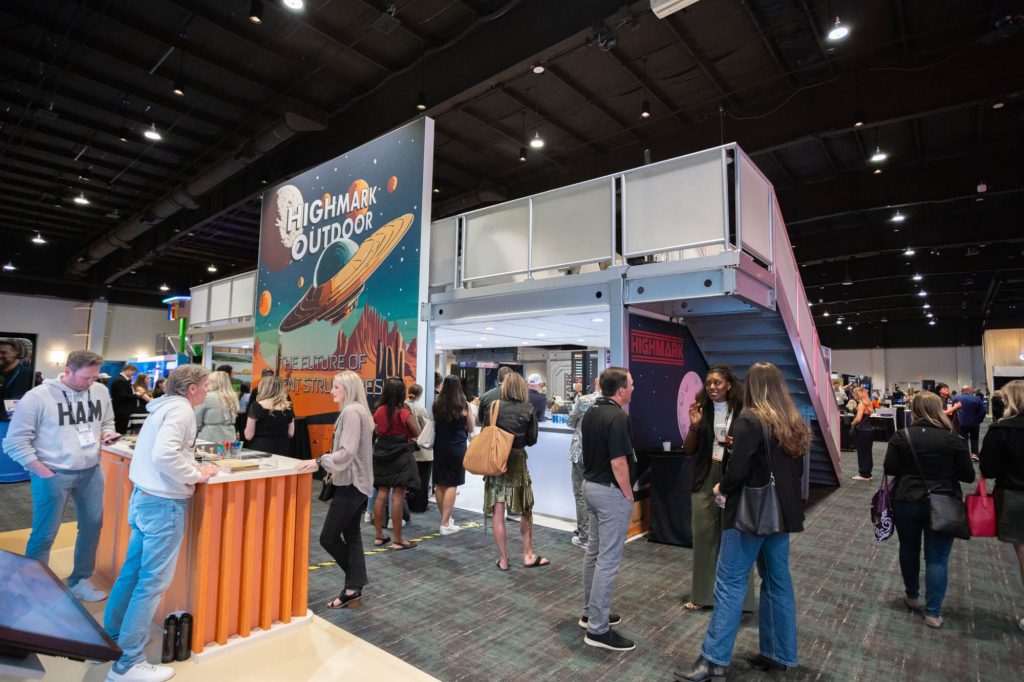
Some brand environments need to live longer than a single event. Large exhibitions, traveling experiences, and immersive marketing environments often require installations that remain in place for extended periods.
Semi-permanent structures make it possible to create modular architecture that supports dynamic experiences while remaining flexible enough to adapt to new creative concepts.
These environments may include:
- multi-level exhibit structures
- immersive brand environments
- product demonstration spaces
- interactive installations
Discover how brands use modular structures at trade shows or experiential marketing activations to maximize visibility and create unforgettable experiences.
Festivals and Outdoor Events
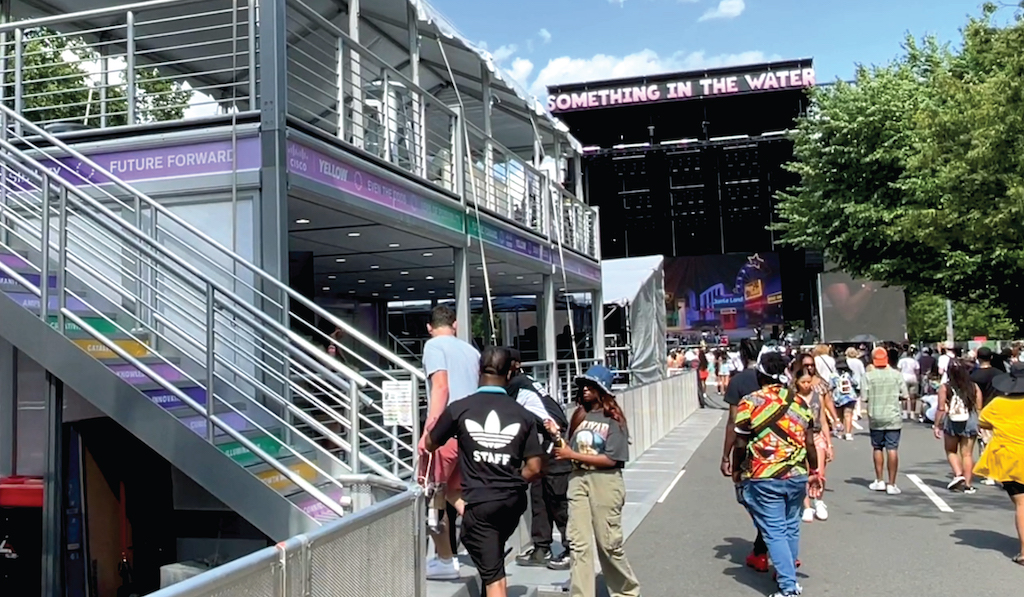
Festivals and multi-week events require structures that can withstand weather, heavy traffic, and extended use. Semi-permanent modular structures provide the durability needed for outdoor environments while allowing organizers to design flexible layouts that evolve year after year.
These structures frequently support:
- sponsor hospitality areas
- elevated viewing platforms
- outdoor brand activations
- modular pavilions
Festival structures are designed to support large-scale outdoor installations for festivals and events.
Museums and Cultural Installations
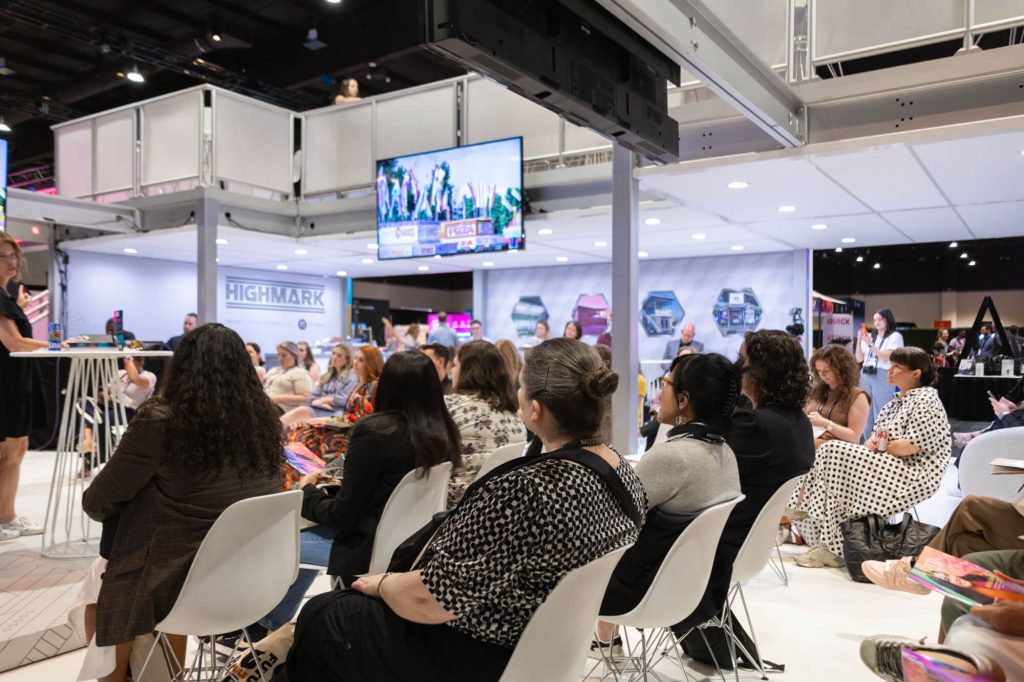
Museums and cultural venues often require architectural installations that remain for months or years.
Semi-permanent structures allow curators to build immersive environments that can evolve alongside new exhibitions.
Examples include:
- interactive exhibit architecture
- modular gallery environments
- educational installations
- interactive display structures
Benefits of Semi-Permanent Structures
Semi-permanent structures offer something traditional construction can’t: architectural impact without architectural rigidity.
Organizations choose modular semi-permanent structures because they deliver the strength, presence, and functionality of permanent buildings while maintaining the flexibility to evolve as needs change.
Built Faster Than Traditional Construction
Traditional buildings can take months or years to complete. Modular semi-permanent structures can be engineered, fabricated, and installed significantly faster. We’re talking in a matter of hours.
Modular Flexibility
Semi-permanent structures are built using structural systems that can expand, reconfigure, or relocate when needed. As organizations grow or projects evolve, modular environments can grow right alongside them.
Sustainable and Reusable Construction
Highmark structures incorporate durable aluminum components that can be reused across projects. Many systems use recycled materials and support sustainable event design.
Learn more about Highmark’s sustainability approach.
Cost Efficiency
Semi-permanent structures eliminate many of the costs associated with permanent construction while providing long-term functionality.
Code Compliance and Engineering
Highmark modular systems are engineered to support structural loads, meet safety standards, and comply with applicable building codes. Every system is designed with structural integrity and long-term performance in mind.
Indoor vs Outdoor Semi-Permanent Structures
Not all environments are built under the same roof. Some live inside convention halls, museums, and corporate spaces. Others face wind, weather, and thousands of fans in open-air venues.
Semi-permanent modular structures are engineered to perform in both settings.
By combining modular structural systems, architectural framing, and engineered components, Highmark structures can be adapted for indoor environments or built to withstand demanding outdoor conditions.
Indoor Semi-Permanent Structures
Indoor modular environments are often designed to support brand storytelling, exhibitions, and immersive experiences.
Because these installations may remain in place for months or years, designers frequently build architectural environments that feel more like permanent spaces than temporary displays.
Indoor semi-permanent structures commonly support:
- museums
- trade show environments
- corporate exhibit centers
- branded environments
- immersive marketing spaces
Outdoor Semi-Permanent Structures
Outdoor environments introduce a different set of structural challenges. Wind loads, weather exposure, and large crowds require structural systems engineered for durability and safety.
Semi-permanent outdoor structures allow organizations to create environments that remain installed throughout entire seasons or multi-year programs.
Outdoor installations often include:
- museums
- trade show environments
- corporate exhibit centers
- branded environments
- immersive marketing spaces
These structures combine modular framing systems, elevated platforms, and architectural components to create environments that function like permanent buildings while maintaining modular flexibility.
Semi-Permanent Structures for Government Use
Highmark also supports select applications involving semi-permanent structures for government, including temporary public engagement spaces, modular operational environments, adaptable event infrastructure, and long-term temporary facilities during renovations, expansions, or special projects.
Our semi permanent building structure solutions provide the flexibility to create secure, durable environments quickly while maintaining the professional appearance and structural performance required for high-visibility public spaces.
Modular Systems Behind Semi-Permanent Structures
Not all environments are built under the same roof. Some live inside convention halls, museums, and corporate spaces. Others face wind, weatheBehind every semi-permanent environment is a structural system designed to support real-world use: crowds, weather, long installation timelines, and the flexibility to evolve over time.
Highmark builds semi-permanent modular structures using a family of engineered systems designed to work together. These systems allow designers and project teams to combine decks, walls, and architectural framing into complete environments that function like buildings while retaining the flexibility of modular construction.
Instead of building from scratch every time, modular systems create a structural toolkit that allows environments to scale, reconfigure, and relocate as needed.
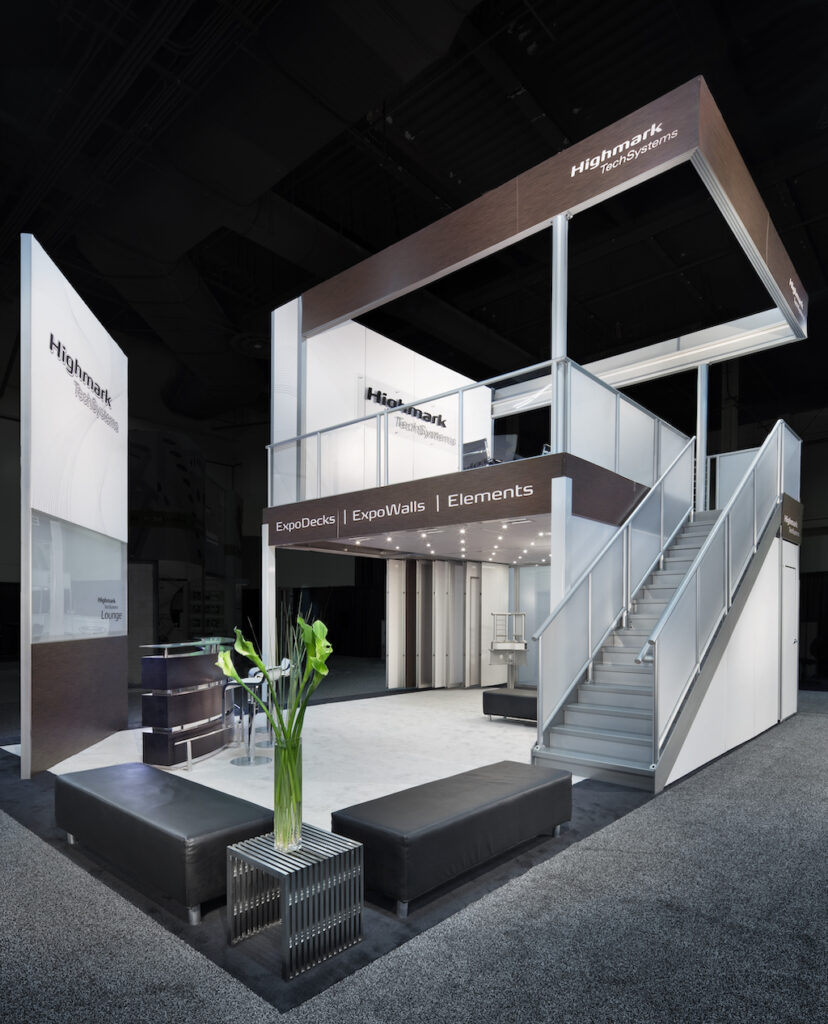
ExpoDeck Modular Deck System
Many semi-permanent structures rely on elevated platforms to create viewing decks, hospitality spaces, and multi-level environments.
Highmark’s ExpoDeck system provides a modular deck platform engineered for strength, flexibility, and structural safety.
ExpoDeck structures allow designers to create:
- elevated hospitality environments
- multi-level event structures
- viewing platforms for sporting venues
- double deck architectural environments
Because ExpoDeck uses modular components, structures can expand, reconfigure, or relocate as projects evolve. Learn more about the top 3 advantages of double deck exhibits.
Explore how double deck structures use the ExpoDeck system to maximize vertical space.
MAX Multi-Wall System
Walls shape environments. They create rooms, guide movement, and define experiences.
The MAX Multi-Wall system allows designers to build modular architectural walls that transform open spaces into immersive environments.
These systems are frequently used to create:
- exhibit architecture
- modular rooms and meeting environments
- brand activation spaces
- exhibition galleries
Because the system is modular, walls can be reconfigured to support different layouts or entirely new environments. It’s amazing how modular wall systems adapt for any event.
Learn more about MAX Multi-Wall modular wall systems.
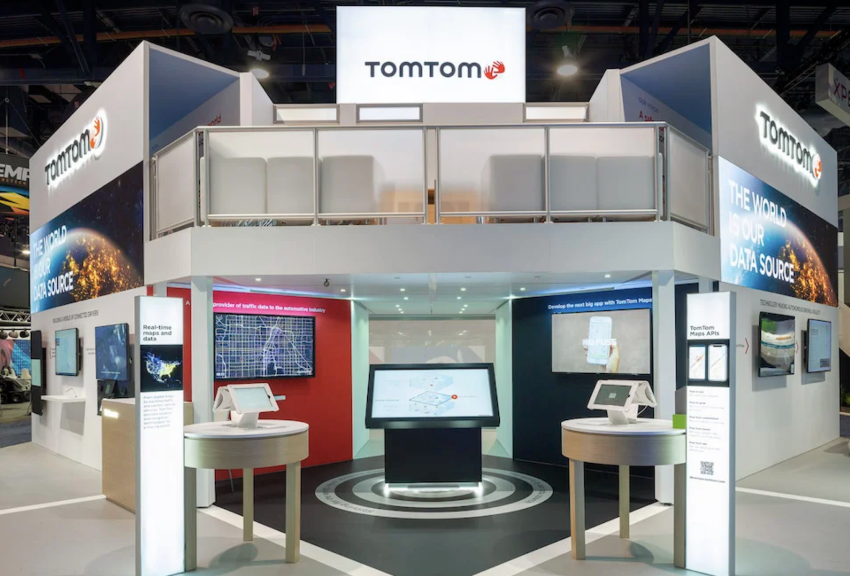

SuperMAX Structural Framework for Large Environments
For large-scale installations, structural framing becomes essential.
Highmark’s SuperMAX system provides modular aluminum framing that supports large architectural environments. This system is often used to create the structural backbone for complex semi-permanent installations.
SuperMAX structures support:
- architectural frameworks
- large modular environments
- experiential marketing installations
exhibition architecture
The system combines structural strength with the flexibility needed to support evolving modular environments.
EventMAX: Outdoor Modular Architecture
Outdoor environments require structural systems designed for weather, wind loads, and heavy traffic.
The EventMAX system provides modular outdoor architecture designed for long-term installations at festivals, sporting venues, and large-scale events.
Your tent is hurting your brand: Try EventMax instead. This modular structure supports:
- outdoor hospitality pavilions
- sponsor activation spaces
- fan engagement zones
- long-term festival installations
These structures combine modular framing with durable architectural elements to create environments that remain in place for extended periods while maintaining modular flexibility.
Plus, they can be built as a single story pavilion or a multi-level double deck.
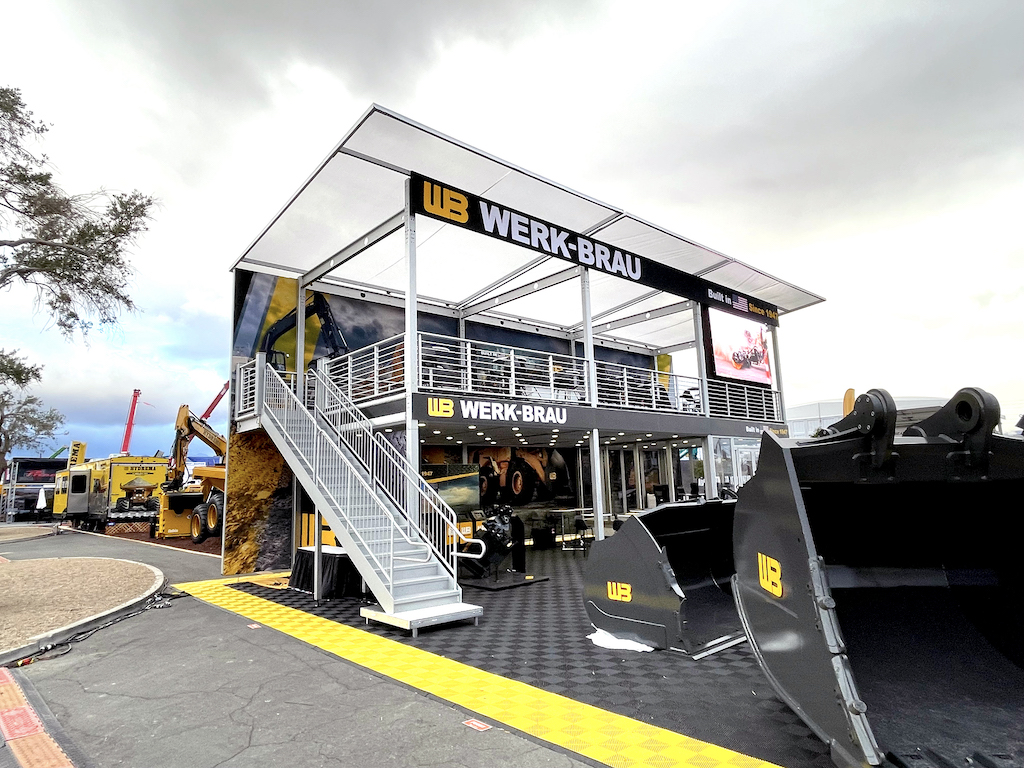
Renting Semi-Permanent Modular Structures
Not every project requires owning a structural system. Many organizations prefer the flexibility of renting modular structures that deliver architectural impact without long-term ownership.
Highmark offers modular structure rentals that allow teams to build environments without committing to purchasing structural systems outright.
Rental structures are particularly valuable when projects require long-term installations but may eventually move, evolve, or end.
Instead of investing in a permanent build, organizations can deploy semi-permanent modular environments using Highmark’s rental inventory.
Choosing a rental structure doesn’t mean compromising on design.
Not every project requires owning a structural system. Many organizations prefer the flexibility of Highmark’s modular systems are designed so rental components can be configured into fully customized environments. Structural decks, framing systems, and architectural elements can all be integrated to create distinctive installations.
This approach provides the architectural impact of a custom structure while maintaining financial and operational flexibility.
70% of Highmark’s clients choose to rent structures. Explore modular structure rentals to learn more.
FAQs About Semi-Permanent Structures
Semi-permanent structures can remain installed for months or years depending on project requirements and engineering specifications.
Related Links
Build Something That Doesn’t Look Temporary
Some spaces are meant to disappear after the weekend.
Others are designed to make an impression that lasts.
Semi-permanent modular structures give brands the freedom to create environments that feel like real architecture.
At Highmark, we engineer structural systems that help leading brands create environments that are bold, flexible, and built to evolve.
Because when your audience shows up, the space should feel just as intentional as the experience inside it.