
TLDR: FOX One wanted two superfans to watch all 104 World Cup matches inside a glass cube in Times Square. Highmark turned that idea into a weather-tight temporary event structure using a standard rental system. Our team moved the job through production and onto trucks in 21 days while managing NYC union labor, box-truck-only freight, and a Knicks playoff crowd.
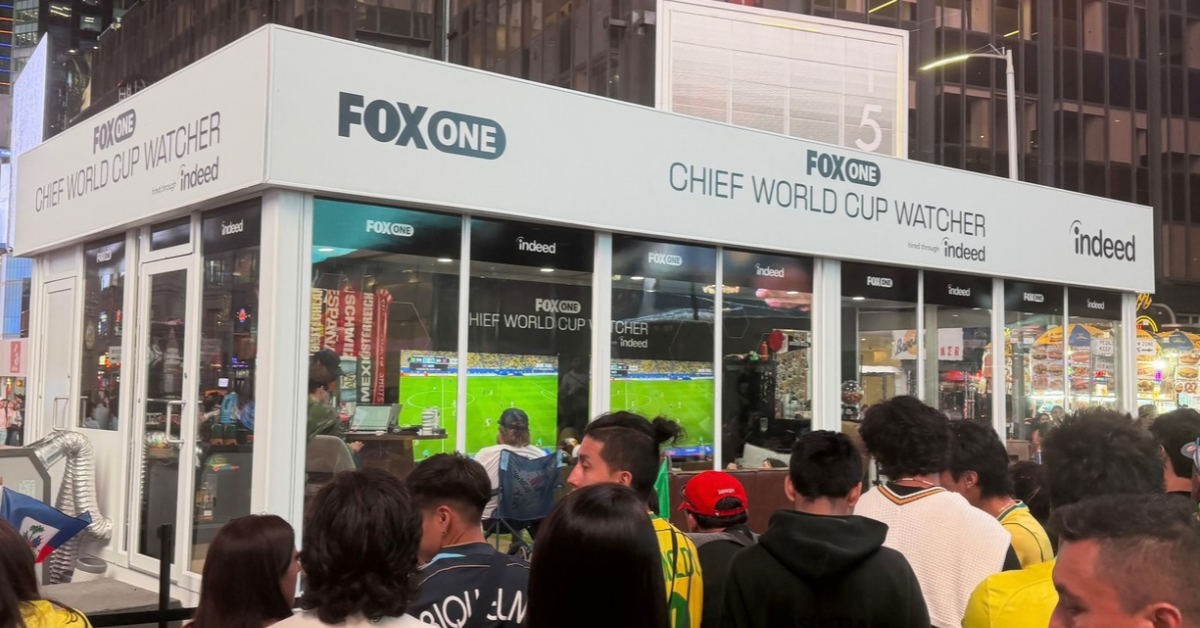
The 2026 World Cup gave brands a rare stage in the U.S., and FOX One wanted the most visible spot. Its answer: a glass-walled cube in the middle of Times Square, with two superfans inside watching every single match.
Highmark TechSystems built that cube. It looked like a custom showpiece, yet it came straight off our rental shelf, and our team got it out the door in just 21 days.
Here’s how the project came together.
The Concept: Two Fans, 104 Matches, One Glass Cube
FOX One and its agency partner had a bold idea. They would put fans inside a glass box in Times Square and let the world watch them take in all 104 World Cup matches.
Thousands of fans applied through Indeed for the title of Chief World Cup Watcher and a $50,000 payday. The response pushed FOX One to pick two winners, Austin Franklin and Kevin Akoto, who signed on to watch roughly 12,600 minutes of soccer while creating content for their followers.
The agency drew inspiration from a glass box installation that promoted the TV series Severance. Their brief to Highmark was simple: a transparent, livable space where passersby could see everything happening inside.
Why FOX One Bet on an Experiential Activation
The cube never aimed to sell tickets or pour drinks. FOX One wanted attention and lots of it.
In an interview with Entrepreneur, FOX Sports CMO of Direct to Consumer Brian Borkowski explained that much of the country still didn’t know FOX One existed. “It’s about the PR and social content that comes out of it,” he said. He added that FOX could have spent five times as much on the cube and it still would have paid off.
That’s the power of experiential brand activations. A striking physical space gives people a reason to stop, snap photos, post, and talk, and each of those moments carries the brand far beyond one event.
Turning a Concept Into a Temporary Event Structure
A Standard System
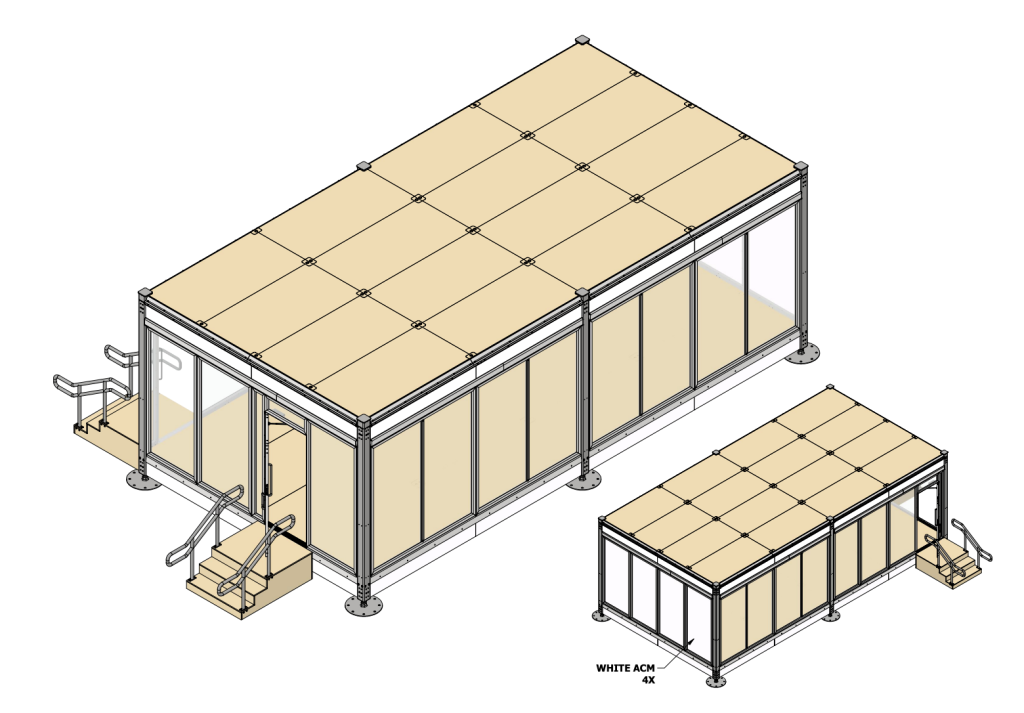
When a client says “we want a glass box,” Highmark’s job starts with translating that idea into something buildable. Our team took the agency’s design intent, mapped it onto our EventMAX outdoor system, and showed them exactly where they would and wouldn’t see metal.
The finished cube needed no real custom fabrication, which kept the budget predictable and the schedule realistic.
What the Cube Was Made Of
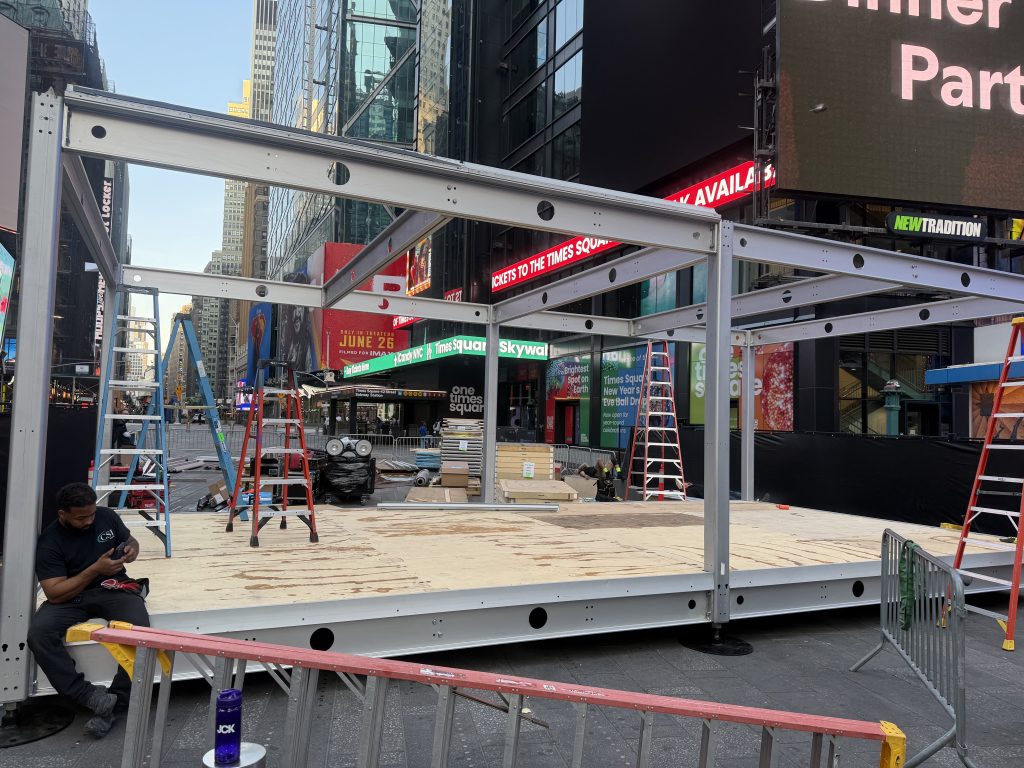
The “glass” walls weren’t glass at all. Every component came from Highmark’s standard outdoor offerings:
- Steel portal columns for the primary frame
- Aluminum beams and aluminum wall panels
- Half-inch polycarbonate infills, a clear and durable choice that holds up well outdoors
- Deck panels above and below, plus a rubber roof bladder to keep weather out
- LED-lit ceilings with ABS panels
- One French door and one single door
Engineered for a High-Traffic Public Space
Any structure in Times Square has to handle wind, weather, and nonstop crowds. Highmark supplied stamped drawings that documented the cube’s wind rating, load rating, and snow rating for a weather-tight build.
The client’s team used those drawings to secure permits with the city, while Highmark focused on getting the structure built.
Building in Times Square on a 21-Day Clock

Contract to Shipment in Three Weeks
Highmark entered the job on May 11 and shipped it on June 3. That gave our team 21 days to produce and pack a structure for one of the busiest public spaces in the world.
The secret was front-end due diligence. Our team worked through design, pricing, and logistics with the client well before the contract landed, so production could move fast once it did.
Navigating Union Labor and Freight Rules
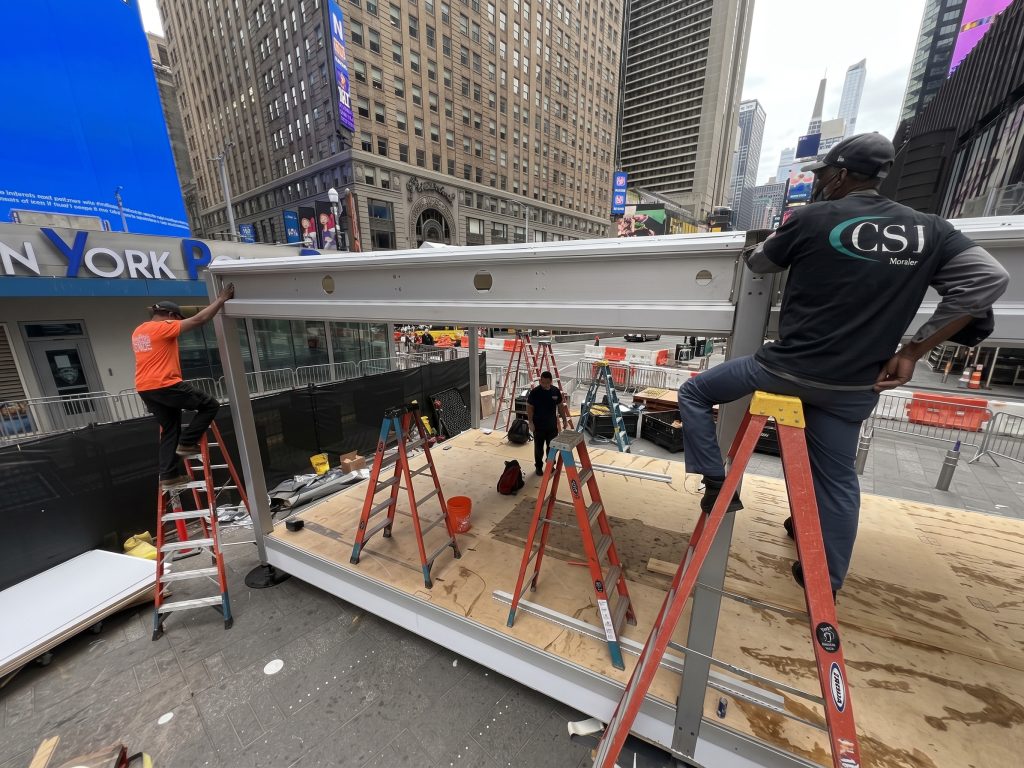
New York runs on strict labor rules, and Times Square adds another layer. Flatbeds couldn’t get in, so the crew brought everything in on 25- to 30-foot box trucks and unloaded every piece by hand.
Only New York teamsters could unload or move freight, while a separate crew of decorators handled the actual build. Teamsters even had to haul the empty pallets out of Times Square.
Highmark partnered with CSI, a New York labor company, to line up the right crews. CSI also stored our empty crates locally for the full tournament, which saved a round trip back to Fort Wayne.
Building Around a Knicks Celebration
Load-in came with its own curveball. The Knicks won a playoff game during setup, and the crowds pushed our build start later than planned.
With only about four days on site, Highmark worked alongside the client’s scenic and AV teams at the same time. Clear communication about who could work in which areas kept everyone moving.
Making a Glass Cube Livable
Highmark built the shell, and the client’s team turned it into a home. They brought in furniture, added a branded header with FOX One graphics above the structure, and ran HVAC and electrical using Highmark’s specifications for power and climate control.
The result looked like a cozy living room on display. Franklin and Akoto spent the tournament there, greeting fans, celebrities, and curious tourists who stopped to talk soccer and take photos.
Teardown in Half the Time
Teardown ran in reverse with the same decorator and teamster crews, and it took about half as long as the install. Because the cube used standard rental components, the pieces can head back into Highmark’s inventory for future projects.
Outdoor Event Structures for Broadcasting and Fan Experiences
The cube proves that the most memorable brand activations don’t always happen inside a stadium. Fans want somewhere to gather and feel part of the moment, and brands want a stage that cameras and phones can’t ignore.
NFL legend Chad “Ochocinco” Johnson put it simply to Entrepreneur: “If you’re not going to a game, you’ve got to go somewhere where there are a lot of people watching.”
Outdoor event structures give brands that somewhere. A modular system like the one behind the cube can serve as:
- A broadcast or streaming set with clear sightlines for passersby
- A branded fan zone or watch party space
- A content hub for influencers and creators
- A hospitality or VIP lounge near a major event
Modular components also let brands scale a footprint up or down and adapt the layout without starting over.
Bring Your Next Experiential Activation to Life
A 21-day timeline, Times Square logistics, and strict union rules couldn’t stop this project.
Highmark’s modular outdoor systems give brands and agencies a fast, reliable path to a standout temporary event structure without the cost and lead time of completely custom fabrication.
Planning an activation around a major sporting event, product launch, or festival? Connect with Highmark to talk through your concept and see what our temporary structures for outdoor events can do.
Frequently Asked Questions
What is a temporary event structure?
A temporary event structure is a modular building that crews assemble on site for a set period, then take down. Brands use temporary event structures for pop-ups, fan zones, hospitality spaces, and experiential activations.
How long does it take to build a temporary structure for an outdoor event?
Timelines depend on size, location, and site rules. Highmark took FOX One’s cube through production and shipping in 21 days, with roughly four days of on-site build time.
What materials did the FOX One cube use?
The FOX one cube combined steel portal columns, aluminum beams and wall panels, and half-inch polycarbonate infills in place of glass. A rubber roof bladder and LED-lit ceilings rounded out the build.
Can brands rent a structure for brand activations instead of building custom?
Yes. The FOX One cube used Highmark’s standard rental system with no real custom fabrication. The client then added its own furniture, branding, and interior finishes.
Are temporary structures safe for crowded public spaces?
Yes. Highmark provides stamped engineering drawings that document wind, load, and snow ratings. Clients use those drawings to secure permits with local authorities.