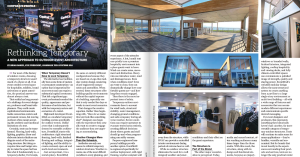
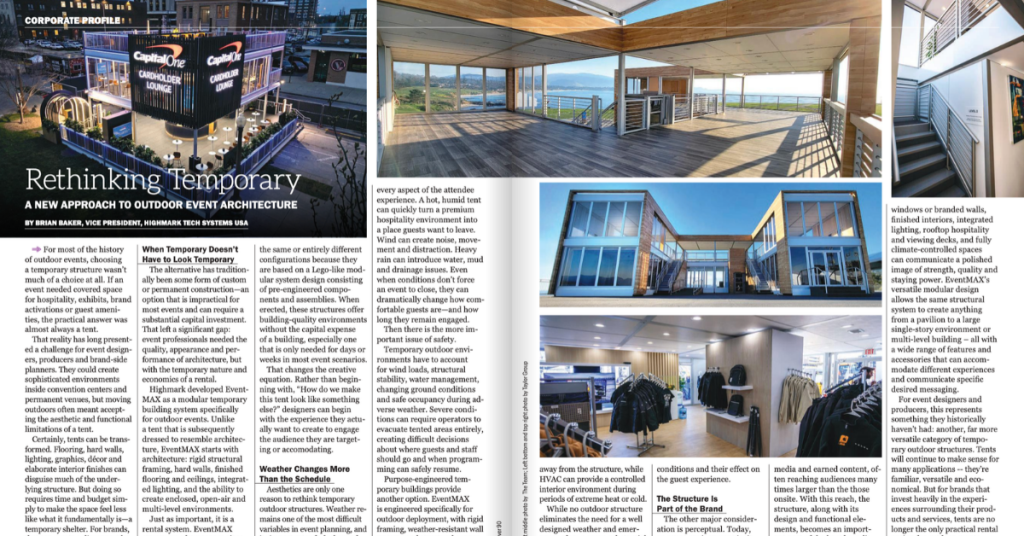
TLDR: Highmark TechSystems Vice President Brian Baker wrote a Corporate Profile feature in the Q4 2026 issue of Exhibit City News. His article, “Rethinking Temporary,” argues that outdoor events no longer have to settle for a tent. Modular, architecture-first structures like EventMAX give planners a new starting point for guest comfort, safety, and brand image.
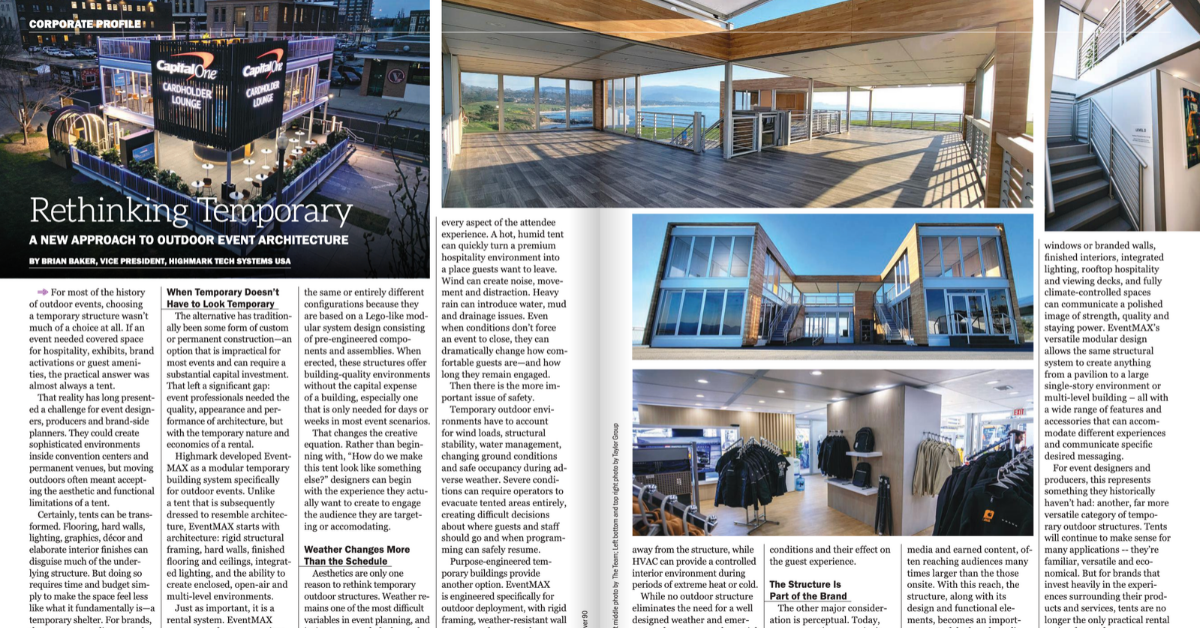
Brian Baker, Vice President of Highmark Tech Systems, wrote a corporate profile feature for the Quarter 4 2026 issue of Exhibit City News, a trusted source of tradeshow news for exhibit and event professionals.
His article, “Rethinking Temporary: A New Approach to Outdoor Event Architecture” tackles a question every outdoor event team eventually faces: what if a tent isn’t the answer?
Below, we recap Brian’s core argument and dig into a few ideas from the piece that deserve more room on the page.
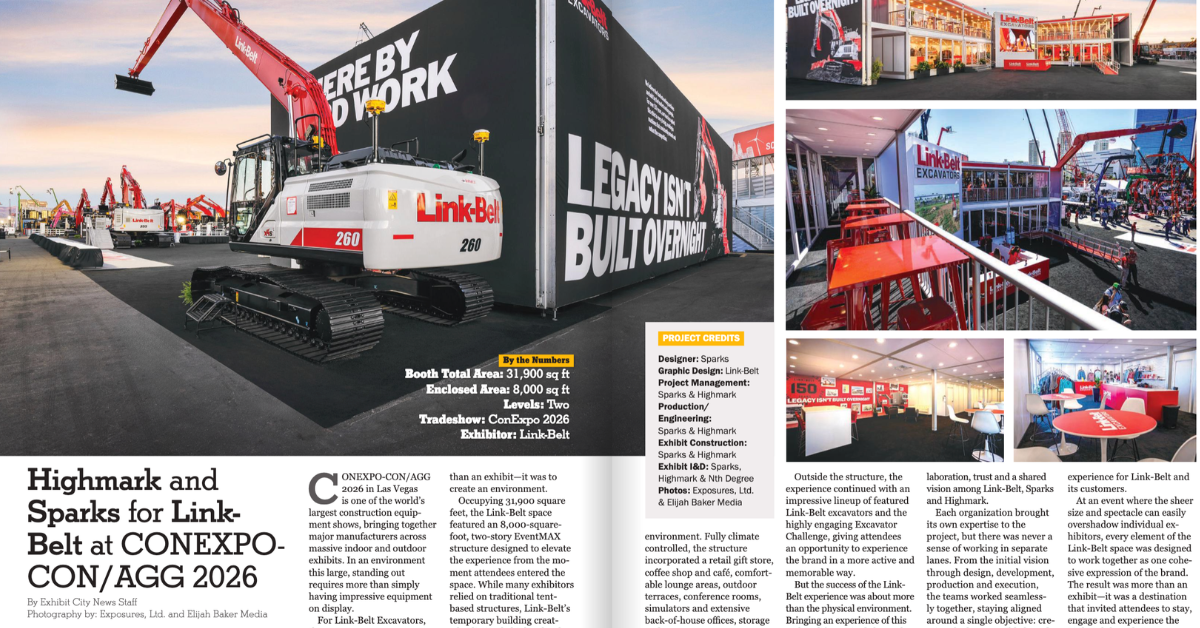
Want the full story first? Read Brian’s article in Exhibit City News and see the projects featured in the spread.
The Big Idea: Temporary No Longer Means Tent
Brian opens with a simple observation. For most of the history of outdoor event planning, anyone who needed covered space for hospitality, exhibits, or brand activations reached for a tent. Designers could dress it up with flooring, hard walls, and lighting, but the space still felt like a temporary shelter.
The only alternative meant custom or permanent construction, which rarely made sense for an event lasting days or weeks. That left a real gap. Planners wanted the look and performance of architecture with the economics of a rental.
Highmark built EventMAX to close that gap. The modular system features rigid framing, hard walls, finished floors and ceilings, integrated lighting, and the option to go multi-level. Crews erect it, take it down, and redeploy it in new configurations for the next event.
Tents still serve plenty of events well, but brands that invest heavily in guest experiences now have a far more versatile category of outdoor event structures to choose from.
Start With the Experience
Instead of asking “How do we make this tent look like something else?”, designers can start with the experience they actually want to create.
That shift changes the whole creative brief. When the structure stops acting as a constraint, the first questions sound different:
- How should guests feel when they walk in, and where should they go first?
- Which moments need privacy, and which need open air and a view?
- Where does the brand story live: on the walls, in the layout, or in the vantage point itself?
A tent-first plan answers those questions with workarounds. An architecture-first plan answers them with the floor plan. A sponsor lounge can become a true event pavilion with a defined entry, a finished interior, and a covered terrace, all within one footprint.
Modularity matters here too. Because the system relies on pre-engineered components, a team can scale the same building blocks up or down for different shows. Highmark’s custom event structures are something a brand can plan around year after year, not just once.
Comfort Keeps Guests in the Room
Brian points out that weather doesn’t need to shut an event down to hurt it. Heat, humidity, wind noise, and rain can quietly change how long guests stay and how engaged they feel.
A guest who leaves a sweltering lounge after ten minutes never hears the product demo, never books the follow-up meeting, and never posts the photo.
A climate-controlled pavilion event space flips that equation. Quiet interiors make conversation easy. Stable temperatures keep hospitality areas full in the middle of the afternoon. Solid walls let teams run programming on schedule instead of watching the forecast.
The engineering behind wind loads, anchoring, and occupancy deserves its own conversation, and we cover it in What It Takes to Go Two Stories at an Outdoor Event. The point Brian makes here is simpler: when guests feel comfortable, they stay, and that time on site drives everything else a brand wants from the event.
The Structure Shows Up in Every Photo
The most forward-looking idea in the article concerns perception. Brian notes that guests on site make up only part of an event’s audience. Photos, video, social posts, and earned media often reach many times more people than the event itself.
That means the structure functions as content. Every wide shot, livestream, and sponsor recap puts the building in front of people who never attended. A rigid, finished structure tells that audience the brand values quality and plans to stick around.
Planners can lean into this from day one:
- Plan the hero shot. Decide where cameras will capture the structure at its best, and orient branding toward that angle.
- Light for evening. Integrated lighting turns the building into a landmark after sunset, when a lot of social content gets captured.
- Use the vantage point. Rooftop decks and upper levels create views guests want to share, with the brand built into the frame.
- Keep the look consistent. A modular system lets a brand repeat the same visual identity across a full season of events.
When the building looks good on camera, it keeps working for the brand long after crews pack it up.
A New Option for Your Next Outdoor Event
Brian’s feature lands on a point Highmark sees at nearly every outdoor activation. Tents remain familiar and economical, but they no longer set the ceiling. When the experience matters most, planners can start with architecture and build the event around it.
That approach pays off in three ways: more design freedom, more comfortable guests, and a stronger brand image that travels well beyond the venue. Highmark delivers all three through the EventMAX event pavilion, with single-level and multi-story configurations that crews erect, dismantle, and redeploy across a season.
Pick up the Q4 2026 issue of Exhibit City News to read Brian’s full article. Then explore EventMAX single and multi-story structures, or talk to our team about your event.
FAQs
What is EventMAX?
EventMAX is Highmark’s modular temporary building system for outdoor events. It uses rigid framing, hard walls, finished floors and ceilings, and integrated lighting, and crews can configure it as a single-level space or a multi-level building.
When should a brand consider an event pavilion instead of a tent?
An event pavilion makes sense when the guest experience carries real weight: VIP hospitality, sponsor lounges, product launches, or multi-day activations. If the brand wants climate control, a finished interior, and a space that photographs well, a rigid structure usually delivers more than a dressed-up tent.
How do outdoor event structures improve the guest experience?
Rigid outdoor event structures keep guests comfortable when heat, wind, or rain would otherwise cut their visit short. Quieter, climate-controlled interiors encourage longer stays, easier conversations, and more time with the brand.
Can custom event structures work for more than one event?
Yes. EventMAX relies on pre-engineered modular components, so crews can dismantle a structure, store it, and redeploy it in the same or a new configuration. That reuse makes custom event structures a practical option for brands with a full season of outdoor event planning ahead.